


Production Management Laboratory
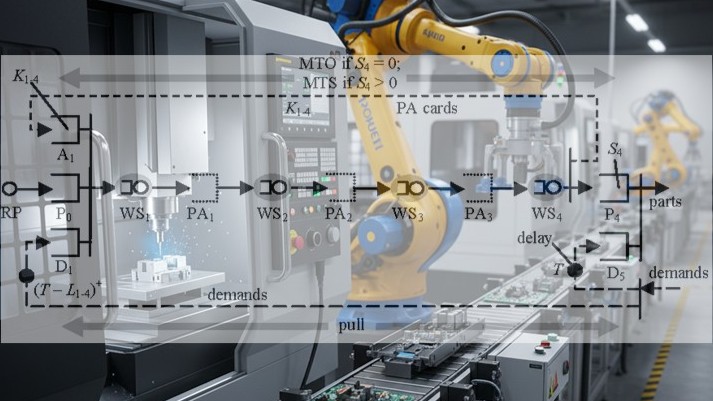
The Production Management Laboratory (PML) was founded in 1995. It plays a pivotal role in supporting teaching activities and pioneering research in the field of systems analysis. This research involves the utilization of operations research, applied probability, and optimal control methods, with a focus on applications in production and operations planning, scheduling and control, supply chain management, design of electricity markets, environmental management, and more.
The Laboratory is under the guidance of Professors George Liberopoulos (Director of the laboratory) and Dimitris Pantelis. It operates in close collaboration with Professors Kostas Ampountolas, George Kozanidis, and George Saharidis, in addition to a talented team of undergraduate and postgraduate students and PhD candidates.
PML boasts a diverse range of research activities. In recent years, its research initiatives have covered a broad spectrum, including but not limited to:
- Design and analysis of production and inventory control policies with advanced demand information.
- Reliability analysis and productivity estimation of unreliable automated lines, particularly within the food industry.
- Inventory management systems where customer service directly impacts future demand.
- Flight planning and maintenance of mission aircraft.
- Pricing strategies in day-ahead electricity markets, addressing non-convexities.
- Analysis of service systems with strategic, delay-sensitive customers.
The Laboratory places a strong emphasis on fundamental research, while also dedicating a significant portion of its efforts to applied and funded research projects, as is the case with its participation in the European lighthouse project www.Productive40.eu.
To delve deeper into the specific research activities of the Laboratory, navigate to the “Research” section in the left menu or simply click here.
Design and Performance Evaluation of Kanban-Type Production Control Systems
Kanban-type production control systems are token-based mechanisms that determine when to release parts for production, based on the demand for such parts and the current work in process. The aim of this research is to develop decomposition-based analytical methods to evaluate the performance of Kanban-type production control systems and use these methods to optimize system parameters.
Analysis of Production/Inventory Control Systems with Advance Demand Information
Advance demand information, when used effectively, can lead to a performance improvement in production-inventory systems. The aim of this research is to address the question, “How should advance demand information be used to increase performance and what is the extent of the performance increase that should be expected?”
Reliability Analysis and Performance Evaluation of Automated Production Lines
A traditional, wide-spread form of organizing large-scale, narrow-scope industrial production is the automated production line. In an automated production line, all materials visit the same workstations in series, thus simplifying material handling. The objective of this research is to perform a statistical analysis of reliability data of real automated production lines and to develop quantitative models for the performance evaluation of such lines, particularly concerning the effective output rate of the manufactured products.
Investigation of the Effect of Stockouts on the Performance of Inventory Systems
Stockout costs are incurred whenever an item is demanded from a supplier and cannot be delivered due to a temporary shortage. The quantification of stockout costs, particularly future profit losses due to the loss of customer goodwill in case of a shortage, has long been a difficult issue. The aim of this research is study the effect of stockouts on the performance of inventory systems by analyzing real customer order data and developing quantitative models in which stockouts affect future customer demands.
Optimal Production Scheduling in Continuous-Flow Industries
An important concern in continuous-flow industrial plants that produce different grades of the same product family (e.g., petrochemicals, polymers, etc) arises from the desire to minimize the cost related to production setup changeovers from one grade to another. The aim of this research is the development of MILP models for the detailed short-term scheduling of such plants, with numerous decision variablled and constraints. To design important parameters of these models, such as safety stock levels, that are related to medium-term randomness, we develop mathematical model variants of the Stochastic Economic Lot Sizing Problem, which are modeled as Markov Decision Processes (MDP). These MDPs are solved with exact and heuristic numerical solution methodologies. The methodologies applied in this research have been implemented on real-life case studies (PET industries).
Design and Analysis of Mechanisms in Electricity and Reserve Markets, with Implementation on the Greek Market
The liberalization of electricity markets in the 90s triggered a series of changes in a sector with a traditional monopolistic structure. The orientation of the newly emerging Greek electricity market is towards the US markets, with simultaneous optimization of all traded commodities – energy and reserves (ancillary services) – in the Day Ahead Scheduling (DAS) problem, that forms the basis of the wholesale electricity market. The aim of this research is the analysis of issues related to the inteaction of energy and reserves, transmission constraints (Greek is divided into two zones: North-South), non-convexities tha arise in the DAS problem, the issue cost recovery by genereting units with the design and evaluation of alternative mechanisms, the effect of the incorporporation of emissions costs.
Environmentally Friendly Vehicle Routing
The objective of this research is to develop a Decision Support System (DSS) to help individuals and companies move passengers and freight in the most environmentally friendly way, minimizing emissions and transportation cost. The DSS, which will operate on a web-based platform and will use existing Geographic Information Systems (GIS), will rely on the development of (i) a function that estimates an “environmental externalities” score for each arc of a transportation network, (ii) new emissions calculation models for different types of vehicles, loads, etc., and (iii) a novel approach for modeling and solving the general vehicle routing problem under the objective of finding the most environmental friendly route.
PML houses a network of PCs and peripherals with software on computer programming, optimization, simulation, statistical analysis, maintenance management, ERP, etc.
By the end of 2023, PML is expected to obtain an MPS 403-1 learning system by Festo Didactic. The system will be used to train basic skills and specialist knowledge in the field of automation technology and mechatronics. As a miniaturized production line, the MPS 403-1 also offers a deep insight into the intelligent networking of machines in the production environment and in their work processes.
PhD Dissertations
- Deligiannis, M. 2022. Supplier Policies Under Service-Dependent Buyer Demand: Ordering, Competition, and Buyer Selection.
- Papachristos, I. 2019. Optimization of Flexible Production and Supply Systems.
- Andrianesis, P. 2016. Analysis and Evaluation of Pricing Mechanisms in Markets with Non-Convexities with Reference to Electricity Markets.
- Hatzikonstantinou, O. 2009. Production Scheduling Optimization in a PET Resin Chemical Industry.
- Tsikis, I. 2007. Quantitative Analysis of the Impact of Stockouts in Inventory Management.
- Tsarouhas, P. 2005. Quantitative analysis of the reliability, quality, and performance of automated production systems.
- Koukoumialos, S. 2003. Performance evaluation and properties of kanban-type policies for the coordination of multistage production-inventory systems.
MSc Theses
- Kallini,.P. 2023. Management of packaging material in a milk industry.
- Grivaki, M. and Nasioka, K. 2022. Dynamic resource allocation for network risk mitigation.
- Adraktas, A. 2021. Timeseries analysis and forecasting in Python programming environment.
- Pispas, N. 2018. Production scheduling optimization in a yogurt packaging line.
- Gogoulos, A. 2018. Robust optimization approach in a single-stage inventory system.
- Karagatslis, D. 2017. Failure analysis of offset printing machines in industry.
- Theodosiou, G. 2016. Performance Evaluation of a Shard Echelon Buffer Policy in Serial Production Lines with Exponential Processing Times.
- Pantazi, Th. 2015. Production and order planning in a two-stage supply chain with external subcontractors and centralized-decentralized decision making and information use.
- Liaropoulos, Α. 2014. Modeling of phased inspection tasks of fighter aircraft through project and resource management.
- Markakis, Ι. 2014. Trimonthly flight planning of an F-16 fighter squadron for the preservation of the combat capability of pilots.
- Takoumis, C. 2014. Performance evaluation and optimization of kanban-type production-inventory systems with simulation through the use of linear programming.
- Beslemes, A. 2013. Computation of Safety Stocks in Supply Chains Based on Rolling Forecasts.
- Diamantis, D. 2013. Optimization of Production Starup in a Production Line of Medium Voltage Cable Isulation and Statistical Data Processing of Sizing Characteristics.
- Popotas, D. 2012. Overview of the Course of Liberalization of the American Rail Market.
- Galanopoulou, A.-M. 2012. Analysis of Cultivation, Harvest and Transport Costs of Biomass to be used as Biofuel in an Electric Power Generating Plant.
- Andrianesis, P. 2011. Short-term Generation Scheduling for the Electrical Power System of Cyprus.
- Sakka, X. 2011. Overview of the Liberalization of Rail Transportation in the European Union.
- Varvasoudis, A. 2011. Modeling of Airfighter Turnaround via Job Scheduling and Resource Management.
- Kraias, I. 2011. Simulation of a Production System with Two Unreliable Machines in Series and an Intermediary Buffer.
- Dio, E. 2010. Comparative Study of (Energy) Demand-Side Management Programs.
- Paschos, P. 2010. Design of Quality Control Sampling Charts in am Office Furniture Production Line.
- Rarra, T. 2010. Analysis of Product Sales Data and the Interaction of Productivity and Costing in a Window and Door Frame Industry.
- Hatzikonstantinou, O. 2009. Economic Lot Sizing and Scheduling of a Multi-Product Production Systems with Two Serial Storage Stages.
- Stamou, I., 2009. Correlating Quality Control Results and End Performance of a Complex Electromechanical System.
- Papapanagiotou, A. 2007. Statistical Analysis of Demand and Production Data in a Resin PET Processing Plant.
- Kotsokolos, N. 2007. Reliability Analysis of Mechanical Equipment in a Steel Processing Plant.
- Moschopoulos, N. 2006. Simulation of the production and packaging lines in a frozen vegetables and foods industry.
- Kelepouris, D. 2006. Modelling and analysis of a metallic structures production line.
- Pyrgiotis, S. 2005. Planning and organizing equipment maintenance in the industry with the aid of project management software tools.
- Zigra, M. 2005. Organizing and realizing equipment maintenance in the industry with the aid of project management software tools.
- Pitsilkas, C. 2004. Planning and outsourcing of aircraft maintenance.
- Tsionas, I. 2004. Case study on the influence of inventory shortages on future customer demands.
- Maglaras, L. 2004. Approximation method for the performance evaluation of the synchronization stations of an extended kanban control system.
- Tsiamanis, D. 2003. Production scheduling in a polyester resin plant.
- Tsikis, I. 2003. Comparative modeling of multi-stage production-inventory policies with lot sizing and advance demand information. Tsoumas, N. 2003.
- Spare parts management under constrained budget: The problem of initial supply in the Hellenic Airforce.
- Strangas, T. 2003. Computation of the initial supply of AVIONICS spare parts in the Hellenic Airforce.
- Chronis, A. 2002. Optimal base stock policies with partial perfect/imperfect advance demand information.
- Goulas, A. 2001. Development of an MRP system at Papaioannou, Inc.
- Dachtaris, I. 2000. Performance evaluation of extended kanban control systems.
- Liapis, T. 2000. Optimization of a single-stage generalized kanban control system with advance demand information.
- Tsarouchas, P. 2000. Improving a croissant-making production line.
Diploma Theses
- Rigakis, D. 2026. Deep reinforcement learning for autonomous agent navigation under limited observability in grid-based environments with static and dynamic obstacles.
- Tasios, M. 2023. Short-Term Electricity Load Forecasting Using Neural Networks.
- Mamais, S-I. 2023. Simulation of a Battaery Swapping Station.
- Chrysostomou Ch. 2023. Modeling ana Analysis of Argyris Sofroniou & Sons LTD’s Production System Operation.
- Tilsizoglou, A. 2023. Production Planning in Yogurt Production Industries – Literature Review of Quantitative Methods and Practices.
- Sidiropoulos, M. 2022. Application of Machine Learning Techniques to Predict Mobile Phone Costs.
- Magirias, G. 2021. Stroke Prediction Using Machine Learning Techniques.
- Moustakalis, M.-D. and Skevofylax, G. 2021. Forecasting of COVID-19 Spread using a Discrete-Time Markov Chain and ARIMA Models.
- Karagiorgis, D. and Souvantzis, O. 2021. Simulation of an Industrial Production Line using Lego Mindstorms EV3.
- Vavouliotis, S. 2020. Analysis and Modification of the Production Line of CHALKIS SA.
- Tsiakiris, E., Kalantaridis, Ch. 2019. Reliability Prediction Using Neural Networks in Semiconductor Manufacturing.
- Papadimitropoulos, K. 2018. Implementation of a Queueing Network Modelling Method for Analyzing Semiconductor Manufacturing Systems.
- Stamatakis, A. and Botsis, S.-T. 2018. Reliability and Maintainability Analysis in Semiconductor Manufacturing.
- Panagiotidis, I. 2018. Mining and Analysis of Freight Flow Data of a Large Transportation Company in Northern Greece.
- Constantinidis, G. and Messis, A. 2018. Analysis of Big Production Data in a Semiconductor Manufacturing Industry for the Estimation of Key Performance Measures and Relations Between Them.
- Chatziplis, I. 2018. Business Plan for the Establishment and Development of a Wine Production Unit.
- Kofos, A. 2018. Stochastic Economic Lot Sizing Problems.
- Papapostolou, Ch. 2018. Production Scheduling Optimization in a Yogurt Packaging Line.
- Papadopoulos, A. 2017 Approximate Analysis of a Veneered Panel MDF Production Line at OXYLOS, S.A.
- Lekkas, V. 2017. Innovation Strategies as Part of Industrial Policy.
- Gogoulos, A. 2016. Optimization of Continuous-Time Dynamic Systems.
- Dimitriou, A. 2011. Inventroy Control and Management Maintenance Parts in a Steel Industry.
- Kalatzis, G. 2009. The Stochastic Economic Lot Sizing Problem in Continuous-Process Production Systems.
- Dimos, N.P. 2009. Project Management of the Expansion of a Waste Treatment Installation.
- Saki, R. 2007. Project Management Software Application for the Construction of an Industrial Plant.
- Lysitsas, G. 2007. Analysis of Production and Demand Data in an Alluminum Products Industry.
- Soilemezidis, K. 2006. Optimization via Simulation of a Serial Two-Stage Production System with Independent Demand in Each Stage.
- Dallis, P. 2005. Application of Advanced Methods for Demand Forecasting and Inventory Control in a Chemical Industry.
- Stagianos, D. 2005. Test Application of a Decision Support System for the Rational Allocation of Resources in the Operation and Maintenance Division of DEPA, S.A.
- Koutroubinas, V. 2005. Optimization of the Timetable of Classes in the Department of Mechanical and Industrial Engineering.7.
- Giorgas, I. 2005. A Myopic Algorithm for Solving the Linear Knapsack Problem with Multiple Choice Constraints and Two Criteria: Profit and Fair Allocation
- Skoulaxinos, D. 2004. Study of inventory control systems with advance demand information
- Papaioannou, K. 2004. Inventory control of equipment replacement parts in a Cement plant. Trikili, K. 2004. Maintenance management in a cement plant.
- Galis, K. 2004. Performance Evaluation of Single-Stage and Two-Stage Base Stock Production Control Policies with Advance Demand Information Through Simulation.
- Bolovinis, K. 2003. Analysis of the Production System of a Furniture Manufacturer based on Computer-Aided Cellular Manufacturing.
- Bofiliakis, N. 2003. Optimization of Inventories in a Supply Chain in the Food Industry.
- Tsenderidis, Ch. 2003. Linking Statistical Analysis of Prodiction Equipment Failures to Product Quality Control.
- Chritis, M. 2003. Feasibility study of plants for the regerention of liquid lubricants.
- Kollatos, M. 2003. Implementation of aggregate planning in a prodution process.
- Kotziapasis, P. 2003. Cyclic production scheduling in a welded wire-mesh manufacturing industry.
- Kiousis, A. 2003. Analysis of failure data and inventory control of machine replacement parts in a production line.
- Mantzios, M. 2002. Statistical analysis of failures and simulation of a food production line.
- Gelasakis, D. 2002. Development of a framework for bridge management.
- Pritsas, D. 2002. Performance comparison of the production control policies Base-Stock/Installation Kanban and Base-Stock/Echelon Kanban via simulation.
- Panagitsas, P. 2000. Optimization of a three stage base stock controlled production system with product differentiation.
- Trifonopoulos, P. 2000. Optimization of a two stage extended kanban control system.
- Dougekos, A. 2000. Safety stock vs. uncertain demand lead time.
- Spernovassilis, I. 2000. Logistics: Transportation-warehousing-delivery.
- Gianoulakis, C. 2000. Electronic commerce.
- Lagios, Th. 2000. Delivery time and inventory reduction in a textile industry supply chain. Dritsas, A. 2000. Study of material handling systems.
- Tsikis, I. 2000. Safety stock vs. safety time in two-stage production-inventory systems with advance information on demand.
- Papadias, D. 2000. Production management in SME’s in the metallic structures industry: THEOSTYL, Inc. and KANAKIS, Ltd.
- Voliotis, Th. 2000. Production management in SME’s in the metallic structures industry: VEK, Inc. and VEMEKEP, Inc. Dorizas, A. 1999. The relationship between advance information on demand and safety stock.
- Tsiligiris, I. 1999. Analysis and optimization of the production line in OXYMACHON, Inc.
- Mari, P. 1999. Implementation of the TPM software AEGIS in the textile company EPILEKTOS, Inc.
- Dimadis, N., 1999. A study of production control systems. Angelopoulos, P. 1999. A study of the ISO 9000 series and its practical implementation in EMPOROVIOTEX, Inc.
- Lambonikou, M. 1998. Design and analysis of manufacturing systems using the simulation software SIMFACTORY.
- Kalfamboulos, E. 1998. A study on kanban-type production control systems.
- Thanopoulos, P. 1998. Optimization of single-stage kanban-type control systems.
Professor George Liberopoulos, Lab Director